How to Look Natural on Camera (Not a Nervous Version of You)
Almost everyone I work with says some version of the same thing before their first shoot: "I just don't look like me in photos." The smile goes stiff, the hands suddenly feel like they belong to someone else, and the face settles into an expression that says please let this be over soon. If that sounds familiar, you're in very good company, and the good news is that looking natural on camera has very little to do with becoming a different, more photogenic person. It's mostly about taking the pressure off.
Why you look stiff (and why it isn't your face)
You look stiff on camera because you feel watched. Your brain treats a camera like a test, and your body responds the way bodies respond to any test: it braces. Shoulders creep up, the jaw tightens, and the smile becomes something you're holding rather than something that's happening. None of that is a flaw in your face. It's a perfectly normal reaction to feeling evaluated.
That's why most "how to pose" advice doesn't help much. Chin down, weight on the back footA classic posing trick: shifting your weight onto your back leg so you stand at a slight angle, which looks more relaxed than standing square to the camera., turn slightly to the side: it's all fine, but it gives an anxious person one more set of things to get right. The fix isn't a better pose. It's changing what you're thinking about, so you stop performing and start just being there.
Give yourself something to do, and someone to talk to
The fastest way to stop worrying about your hands is to give them a job. Pour the drink. Style the hair. Slide the coffee across the counter. Pick up the product you're proudest of and show me why. When you're doing the thing you do every day, your face relaxes on its own, because you're not posing anymore, you're working. You've done it a thousand times, and it shows.
The other half is conversation. On a shoot, I talk to you the whole time: about your business, about your weekend, about the customer who came in last week and made your day. The best shots almost always happen mid-sentence or mid-laugh, in the moment you've forgotten the camera is there for a second. That's not luck. It's the plan.
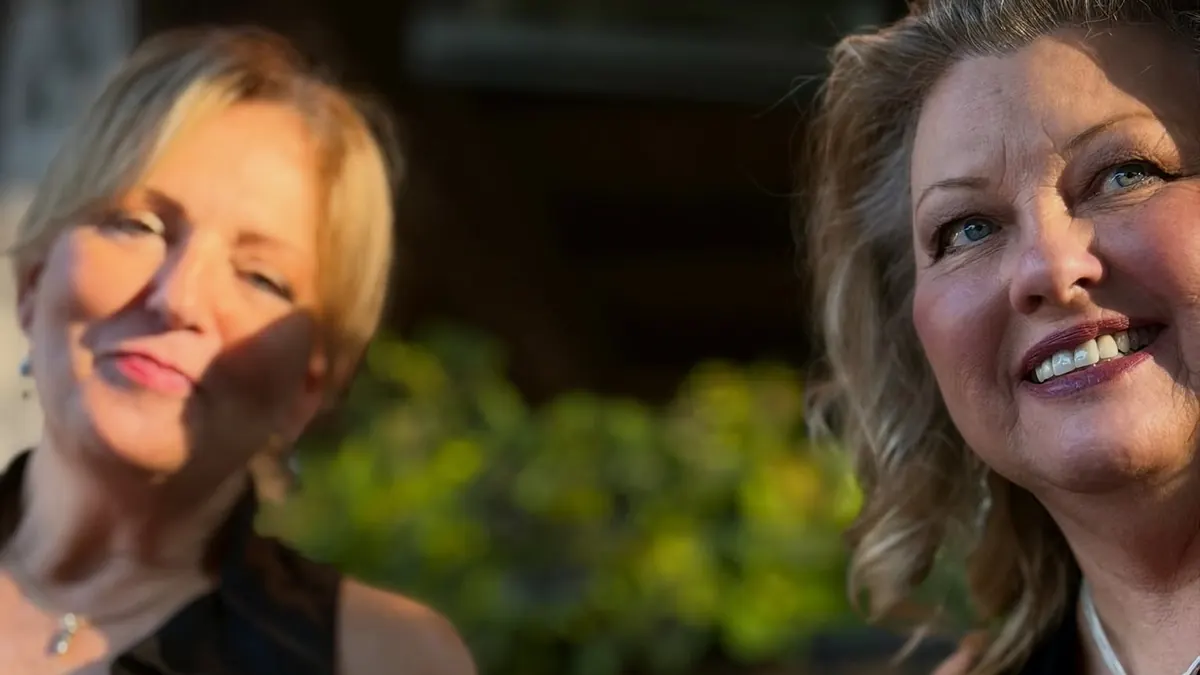
Look at the photo at the top of this post. Nobody told those two women to laugh. They were laughing, and the camera happened to be there. Real joy reads instantly to anyone scrolling past, and a held smile, however nice, never quite gets there. So if you feel a little silly at some point during a shoot, good. The next frame is usually the one.
Let someone else worry about the details
One of the biggest reasons people look tense is that they're monitoring themselves the whole time. Is my hair doing the thing? Is my collar flipped? Is that a weird shadow on my face? When you're tracking all of that, you can't also be relaxed.
On a shoot, that's my job, not yours. I'm watching the hair, the collar, the light and the background so you don't have to. When you know someone has your back on the details, you can stop checking yourself and just be yourself. One client described it like this: I made her feel "so comfortable and confident as someone that isn't used to being filmed." That's exactly the shift I'm after, from watching yourself to forgetting to.
If you want to practice before your first shoot, try this: have a friend film you for one minute while you do the most ordinary part of your job, and have them chat with you the whole time. Then watch it back. I'd bet you look a lot more like yourself than you expect, and that's the person your customers want to see.
Keep reading
What to Expect at Your First Content Shoot (It's Less Scary Than You Think)
From the first call to the last shot: what a shoot with me actually looks like, so nothing about it is a surprise.
Fun Is the Brand: Content Ideas That Show You Enjoy What You Do
People buy from people they like. Five fun content ideas that show who you are, not just what you sell.